Streamline your finance function
Finance
Transformation For Growing Businesses
Offering deep-dive technical expertise in legacy financial structures, reporting and modern ERP frameworks, Hassall Consulting gives you the detail you need to make better business decisions.

As businesses grow, finance systems and reporting processes often struggle to keep up. Disconnected systems, manual workarounds and delayed reporting can leave leadership teams making decisions without reliable financial visibility.

Systemic Finance Function Reviews
Deconstructing legacy financial ecosystems to identify structural vulnerabilities and opportunities for growth.
Hassall Consulting works with business owners and leadership teams to strengthen the finance function so decisions can be made with confidence.
The focus is practical:
- simplifying finance processes to drive prompt capture of clean data
- enhancing financial systems and leveraging latest technology
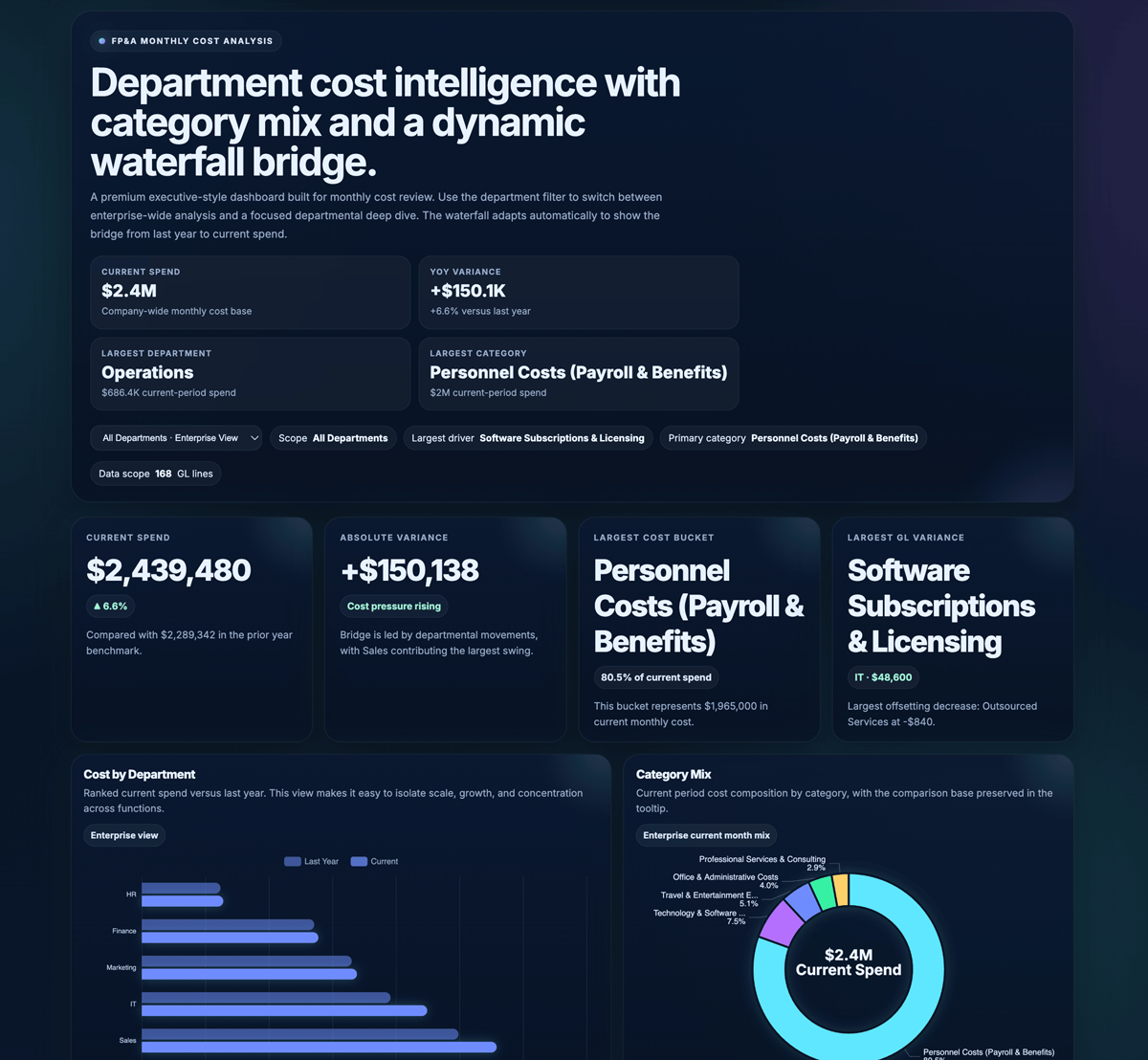
- delivering dashboards, reports & commentary with accuracy and timeliness.
When finance systems fall behind business growth
Many businesses reach a stage where the finance function is no longer keeping pace with the scale and complexity of the organisation. At first the symptoms are subtle. Over time they compound.
You may recognise some of the following.
Reporting arrives too late to be useful
By the time financial reports are finalised, the business has already moved on. Leadership is forced to make decisions using incomplete or outdated information.
Finance teams spend most of their time fixing data
Capable finance staff end up reconciling spreadsheets, correcting coding errors and chasing missing information rather than analysing business performance.
Growth exposes weaknesses in finance processes
Processes that worked when the business was smaller begin to break down as complexity increases.
Leadership lacks clear operational visibility
Management reports contain large volumes of data but very little clarity about what is actually driving business performance.
Growth exposes weaknesses in finance processes
Processes that worked when the business was smaller begin to break down as complexity increases.
Leadership no longer fully trusts the numbers
When financial reports are inconsistent, frequently adjusted, or difficult to reconcile with operational reality, confidence in the numbers begins to erode. Leaders begin double-checking reports, relying on spreadsheets outside the finance system, or making decisions based on instinct rather than financial data. Once trust in the numbers is lost, the finance function can no longer effectively support the business.
When these issues compound, decision-making slows, confidence in the numbers declines, and leadership loses the visibility it needs to run the business effectively.
Hassall Consulting gives your business real world strategic insight in
Compliance Frameworks
Alignment of legacy processes with evolving regulatory mandates, ensuring bulletproof reporting standards.
- Regulatory Mapping
- Audit Trail Fortification
- Governance Modeling
Risk Mitigation
Quantifying systemic exposure through stress-testing and architectural diagnostics to prevent fiscal erosion and operational downtime.
- Exposure Assessment
- Liquidity Stress Testing
- Disaster Recovery Design
The Hassall Process
Review Methodology
Discovery
Mapping the existing technical landscape and data silos.
Diagnostics
In-depth analysis of systemic inefficiencies and risk points.
Architecture
Designing the optimized fiscal blueprint and integration map.
Deployment
Seamless execution and performance monitoring phase.
ERP Integration & Technical Reporting
Single Source of Truth
Consolidating fragmented data streams into a singular, authoritative ledger for absolute clarity.
Real-Time Insight Architecture
Developing low-latency reporting systems that turn raw data into strategic board-room visibility.
Legacy Bridge Design
Creating secure, high-performance connectors between heritage systems and cloud-native ERPs.
Ready to streamline your
finance function?
Secure your system's integrity with our architectural diagnostics. Speak with Hassall Consulting today.